
If you want to start an ecommerce business in India, there has never been a better time than now. India’s ecommerce industry is growing faster than ever. The Indian eCommerce market was around $147.3 billion in 2024 and is growing at nearly 19% annually. Plus, by 2027, India is expected to have 400 million online shoppers. This means there’s a huge pool of people ready to buy, especially beyond big cities.
If you look around, there is a significant change in consumer behavior and which is what makes this even more exciting. Yes, India now has over 850 million active internet users. In fact, as of 2024, the Internet and Mobile Association of India (IAMAI) reported around 886 million active users. And that number is only climbing fast. Due to this, cheap smartphones plus affordable data plans have made online shopping a daily habit for millions. Tier 2 and Tier 3 cities are driving most of this growth, which means the market is still wide open for new players like you.
2025–26 is the golden period to begin. Why? Because people are not only buying more online but also trusting new brands quickly, thanks to social media, influencer marketing, and payment security. You don’t need a shop on the street, lakhs of rupees, or a big staff to get started. With the right eCommerce platform and some expert help, you can have your store live within a few days.
In this guide, you’ll see simple step-by-step instructions to start your ecommerce business in India. From choosing the right niche, setting up your Shopify store, fixing site speed, and even marketing your products, you’ll know exactly what to do.

Before you start an ecommerce business in India, the first step is to know what people are actually buying. You can’t just pick a random product and hope it sells. You need proof that there’s demand.
Here’s how you do it:
This is how, for example, you can choose your niche. Something that people want, but also gives you space to stand out. For example, fashion, beauty, home décor, groceries, and electronics. If you know, these are booming categories in India right now.
For example, selling plain T-shirts is tough because hundreds of people are already doing it. But selling eco-friendly cotton wear or oversized streetwear is what you can begin with in order to stand out. A focused-niche brand is easy to remember and can grow quickly.
Once you’ve locked your niche, the next step is to decide how you want to sell. Your business model decides how you are going to make the money and how your products are going to make a statement in the market.
Here are the main options for you in India:
Now, after this deep research, you know what to sell and how you’ll sell it. The next step is making it official and legal. Without proper registration and papers, you can’t run a business in India. You will, for example, need to open a business bank account or sell on platforms like Amazon or Flipkart.
Here’s what you need to do:
These steps are very important for you to start an eCommerce business in India. These steps can save you from legal headaches later. Once you have these in the first place, you’re ready to start selling anywhere, on your own website or big marketplaces.
This is the step where your business actually comes alive; your website is your shop. The way it looks, loads, and feels will decide if people buy or bounce.
First, you need to choose a platform. If you want something quick and professional, Shopify is the best option. It’s easy to manage and comes with apps that help you scale. For you, other options are WooCommerce (good if you already have a WordPress site) and Magento (best for very large businesses, but you need to have technical skills).
Next, get your domain name (yourstore.com) and connect it with hosting. For payments, set up trusted gateways like Razorpay, PayU, or PhonePe. Here, you need to choose the gateways that people use in India very commonly.
Now, focus on design and features. Your store must have:
Now, at first, you don’t need to go with a very fancy and modern website design. Instead, keep it fast, simple, and easy to use. If you’re not confident, you can hire a Shopify development company or a Shopify website development agency to set it up right the first time.
Once your store is live, the next big question is how you will deliver the products? Selling is only half the game; getting orders safely to customers is what actually makes or breaks your ecommerce business.
You’ve got a few ways to do it:
For shipping, you don’t need to reinvent a separate wheel for your business. You can, for example, go with trusted partners like Delhivery, Shiprocket, Blue Dart, or DTDC. Most of them are very easy to connect directly with Shopify and other platforms, so you can manage deliveries without stress.
And don’t skip COD (cash on delivery). In India, more than half of online orders still happen this way. Have a clear return policy too; it builds trust and keeps buyers from hesitating.
Building your store is one thing. But if nobody knows it exists, how will you get sales? This is where marketing steps in.
Start with SEO. You can hire a Shopify expert in this case. The expert will help you write keyword-focused product descriptions, blogs, and guides with the keywords people search for. You don’t have to be an SEO pro, just cover the basics like titles, meta tags, and alt text. Over time, this will bring free traffic from Google.
Now, understand that SEO takes time. If you want orders quickly, put some money into Google Ads or Facebook Ads. Even $10 a day can give results if you target the right audience.
In this social media age, you should also leverage its power. In India, people shop directly through Instagram, WhatsApp, and even small reselling apps. Share posts, reels, and customer reviews. Let people see your brand where they already spend time.
Keep email marketing in your plan, too. A short email about discounts or new arrivals is enough to bring old buyers back. And if your budget allows, work with local influencers; small ones often have more trust in their community than big celebrities.
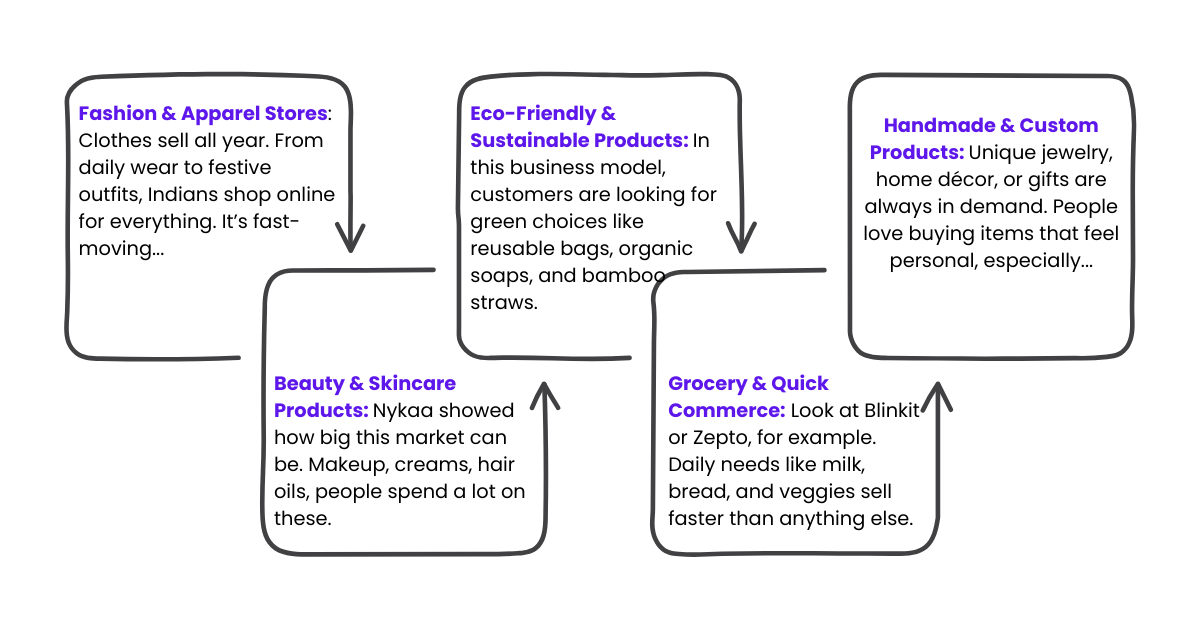
Even after the above points, if you’re not sure what to sell, here are five ideas that actually make money in India:
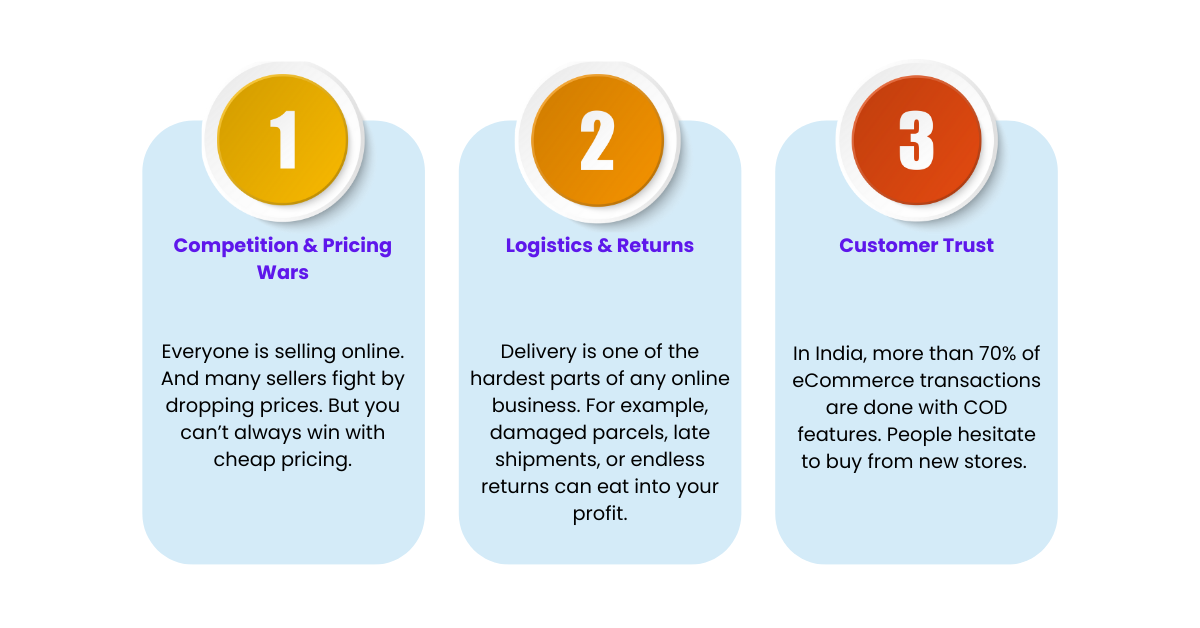
Starting an eCommerce business in India is exciting, but it’s not as easy as you think. You’ll face so many market problems, technical issues, and what not. But as you go along the way, you will also be able to find the right solutions.
Take a look at some of the challenges & their solutions:
Everyone is selling online. And many sellers fight by dropping prices. But you can’t always win with cheap pricing. What you can do is pick a niche and stand out. Maybe you offer better quality, faster delivery, or unique packaging. Build a brand, not just another store. That’s how you escape the price trap.
Delivery is one of the hardest parts of any online business. For example, damaged parcels, late shipments, or endless returns can eat into your profit. The solution is simple—work with trusted partners like Delhivery, Shiprocket, or Blue Dart. Yes, returns will happen. But with clear policies and reliable shipping, you can reduce the headache.
In India, more than 70% of eCommerce transactions are done with COD features. People hesitate to buy from new stores. That’s normal. You have to earn trust. Start with simple steps, add Cash on Delivery, show honest customer reviews, and keep your support responsive. When buyers see proof that others trust you, they’ll buy too.
Starting an eCommerce business is one thing, but running it successfully is another. You need more than just a store; you need speed, SEO, and a valid setup.
We’re a leading eCommerce website development company in India. For the last 13+ years, we’ve been helping businesses launch and grow online stores that actually sell. From small startups to enterprise brands, our team has handled every challenge in the ecommerce world.
Here’s what you get with us:
If you’re serious about building an online business, you don’t need to waste months doing it alone. You can now work with us, and you’ll have a Shopify expert agency by your side from day one.
Starting an eCommerce business in India is not as complex a thing if you know the exact steps to work on. You just need to take it one step at a time.
For example,
Once everything is ready, you will then need to work on logistics and marketing to keep sales moving.
The main thing to remember is this: your niche and business model decide half of your success. If you sell the right product and deliver it the right way, growth becomes easier.
Now it’s your turn. There is no perfect time to start your business. Use this step-by-step guide, launch your Shopify store, and start selling now. The faster you begin, the faster you’ll learn and grow. Your ecommerce journey in India won’t start on its own—you have to take the first step.
You don’t always need lakhs. A simple Shopify store can start with 30,000 to 50,000. If you want custom features or aggressive marketing, the cost in that case goes higher.
Yes, you have to. A GST number, PAN, and a bank account are basic requirements. Marketplaces like Flipkart or Amazon won’t let you sell without them.
Yes, you can. With dropshipping or print-on-demand business models, your supplier packs and ships directly to the buyer. You only handle orders, not storage.
With a Shopify development company like Appco Software, you can go live in 1–2 weeks easily.
Of course. Without SEO, your store won’t show up on Google. And if people can’t find you, they won’t buy from you. Simple as that.
Fashion, beauty, groceries, and eco-friendly items sell really well. But honestly, the best niche is the one that you understand and can market better.
You can tie up with delivery partners like Delhivery, Shiprocket, or Blue Dart. Shopify also connects with shipping apps, so managing orders gets easier.
You can set up a basic store alone, but you’ll miss the details. Experts give you a faster, SEO-ready, and scalable store that avoids costly mistakes.