If you are running an online store in India, you might be facing some sort of challenges. No doubt, the eCommerce business is growing very fast. But managing it has become very hard and challenging. In 2026, almost every second person buys things online. But if you know solutions to all your eCommerce issues (eCommerce challenges and solutions), you are good to go. From rising ad costs to fake COD orders, from slow websites to customers leaving carts halfway, these problems show up almost every single day.
Many sellers face eCommerce challenges in India that were not so serious a few years back. Because now, competition is higher, customer patience is lower, and expectations are very different. If a website is slow, people leave. If delivery is late, returns increase. If support is poor, reviews turn negative. These eCommerce business problems in India don’t sound big individually, but together they quietly eat profits.
This guide is written for real store owners. Here, we will talk about practical eCommerce challenges 2026 will bring and workable solutions you can apply.
Quick Overview: Problems & Solutions
| Everyday eCommerce Problem |
Solutions |
| Low traffic, low sales |
Consistent marketing automation |
| Payment failures |
Reliable payment gateways |
| Order handling confusion |
Better order management tools |
| Delivery delays |
Improved logistics planning |
| High COD returns |
OTP and prepaid push |
| Low conversion rate |
CRO-focused product pages |
| Cart abandonment |
Simple checkout options |
| Slow website speed |
Speed and performance fixes |
| Support overload |
Chat and CRM systems |
| Low brand trust |
Reviews and clear policies |
Top 10 eCommerce Challenges and Solutions in India

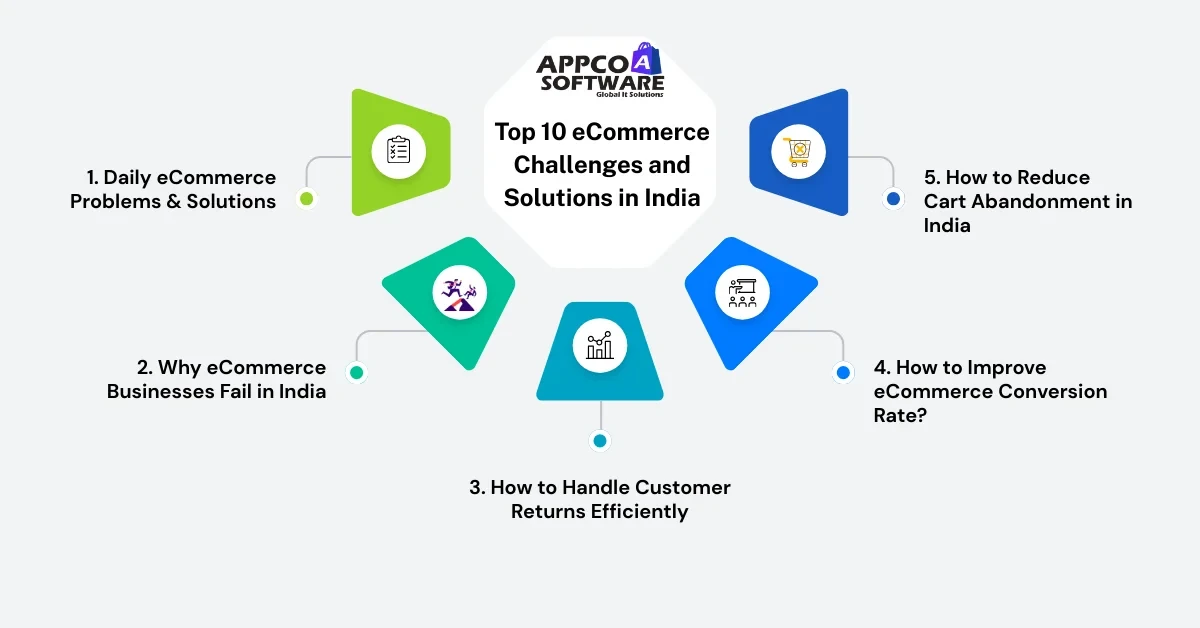
1. Daily eCommerce Problems & Solutions
- Low traffic and inconsistent sales: When you run an eCommerce store, one thing you’ll notice very quickly is that traffic never stays the same. Some days, you see visitors coming in, orders dropping, and things feel good. Then suddenly, for two or three days, it’s almost silent. This usually happens because marketing is done randomly, not in a planned or repeatable way, so results also become random.
- Payment failures: You’ll see customers adding products, reaching the payment page, and then nothing. Payment fails. Sometimes the gateway acts up, sometimes the mobile experience is bad, or sometimes customers simply don’t see a payment option they trust.
- Order management issues: As orders increase, handling them manually becomes very hard. And this leads you to order delays or sometimes, inventory mismatches start creating confusion for both sellers and customers.
- Delivery delays: In India, late deliveries are common due to courier issues, poor coordination, or unrealistic timelines, which often lead to customer frustration and return requests.
Solutions
- When marketing automation is set up, traffic and follow-ups become steady instead of random.
- When reliable payment gateways are used, checkout failures are reduced, and customer confidence improves.
- When order systems are organised properly, inventory and delivery updates will not be missed.
- When logistics and fulfillment are planned better, delivery delays and complaints naturally reduce.
Also Read – Why Shopify is the Best Choice for Your eCommerce Website in 2026?
2. Why eCommerce Businesses Fail in India
- High competition and low profit margins: In most categories, you’ll see too many sellers fighting only on price, and over time, this slowly spoils margins, making survival tough for small and mid-sized stores.
- Poor marketing and SEO strategy: In many cases, stores depend only on ads and skip long-term visibility, so the moment ad budgets are reduced, sales drop without any warning.
- High RTO and logistics costs: Things like returns, refusals, and delivery failures increase costs, and over time, these losses turn into serious eCommerce business problems in India.
- Lack of customer trust: If a store is new in the market, customers will hesitate to buy because of trust issues.
Solutions
- When niche positioning is okay, competition reduces, and pricing pressure becomes manageable.
- When SEO and performance marketing work together, traffic stays balanced instead of ad-dependent.
- When retention and trust-building are prioritised, repeat orders increase and marketing costs drop.
Also Read – How to Start an Ecommerce Business in India?
3. How to Handle Customer Returns Efficiently
- High COD returns and RTO: In many Indian stores, COD orders look good on paper but turn into refusals at delivery, which increases losses and creates serious eCommerce return management issues.
- Fake or incomplete orders: In some cases, customers enter wrong details or place orders casually, which leads to failed deliveries and wasted shipping costs.
- Slow refund process: When refunds take too long, customers lose patience, support tickets increase, and negative feedback starts appearing across platforms.
Solutions
- When OTP-based delivery confirmation is used, fake acceptances and casual COD orders are reduced.
- When partial COD or prepaid incentives are offered, serious buyers move forward with confidence.
- When return and refund policies are written clearly, misuse reduces, and expectations stay aligned.
To understand more about the COD and RTO in the eCommerce business, read this article: What Is RTO and COD in eCommerce and Why It Matters in 2026?
4. How to Improve eCommerce Conversion Rate?
- Low product page conversions: In many stores, visitors land on product pages but are not ready to buy. Because information is not updated, or benefits are not explained properly.
- Poor mobile experience: These days, most users shop on mobile phones. But if your website is not mobile-friendly or slow, you are not going to make a sale, which has become a major part of the eCommerce challenges in 2026.
- Lack of trust signals: When reviews, ratings, or basic trust indicators are missing, customers hesitate, overthink, and leave without completing the purchase.
Solutions
- When product pages are built with clarity and structure, eCommerce conversion rate optimization improves naturally.
- When reviews, ratings, and trust badges are shown clearly, hesitation reduces and confidence increases.
- When checkout is simplified and mobile-friendly, more users complete orders instead of dropping off.
Also Read: Shopify Traffic But No Sales: 10+ Proven Tips to Boost Conversions in India
5. How to Reduce Cart Abandonment in India
- High shipping costs: In many cases, customers are ready to buy but leave the moment extra charges appear at checkout, especially when shipping costs were not shown clearly earlier.
- Forced account creation: In a hurry to place orders, many users don’t want to create accounts, and forcing sign-ups becomes a common reason behind reducing cart abandonment in eCommerce issues.
- Limited payment options: When preferred payment methods are missing, customers hesitate and abandon carts, even after spending time selecting products.
Solutions
- When guest checkout is allowed, users move faster through checkout without unnecessary friction.
- When multiple payment options like UPI, COD, and BNPL are offered, drop-offs reduce significantly.
- When exit-intent reminders and follow-ups are used, some lost carts convert back into orders.
Also Read – Top 10 eCommerce Platforms to Build Your Online Store
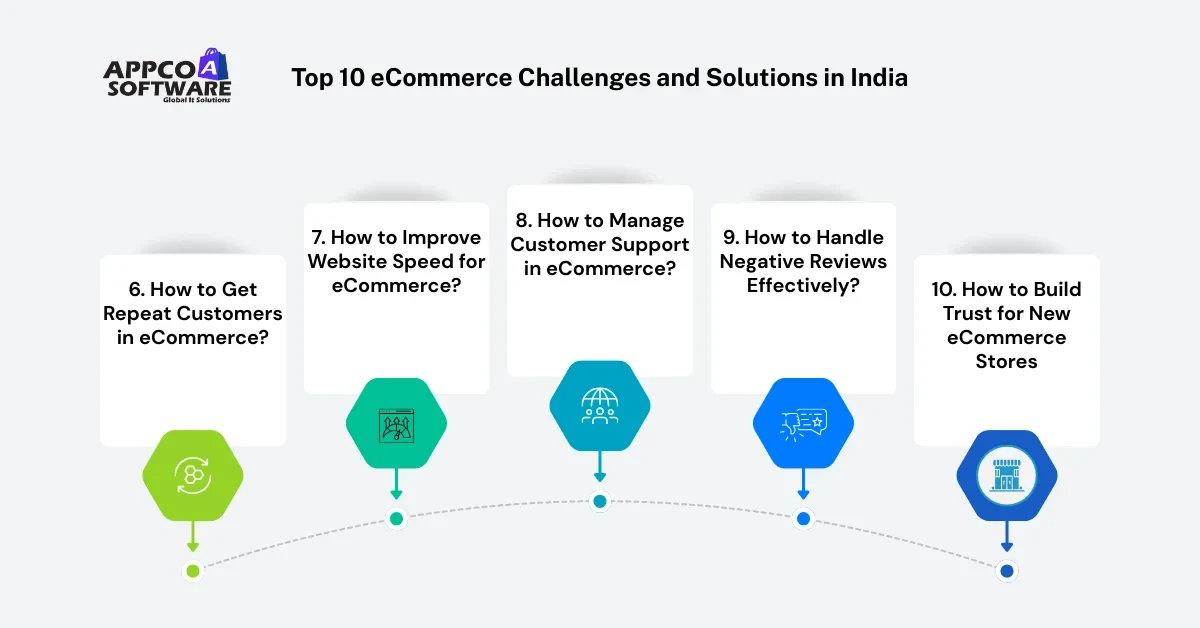
6. How to Get Repeat Customers in eCommerce?
- One-time buyers: One problem many store owners don’t notice early is one-time buyers. A customer places an order, receives it, and then disappears. Slowly, this becomes one of the silent eCommerce challenges in 2026, where marketing costs keep rising because every sale needs fresh effort again.
- Heavy dependency on paid ads: Because repeat customers are missing, stores start depending heavily on paid ads. Sales come only when money is spent. And without knowing how to get repeat customers in eCommerce, growth turns costly and unstable, month after month.
Solutions
- When email and WhatsApp follow-ups are planned properly, customers stay connected even after the first delivery.
- When loyalty points and referral programs are introduced, buyers get a clear reason to return again.
- When support is handled smoothly after delivery, managing eCommerce customer support improves trust and repeat purchases.
Also Read – 10 Reasons to Choose Shopify for Your eCommerce Store
7. How to Improve Website Speed for eCommerce?
- Slow mobile loading: One problem that hits many online stores is slow mobile loading. Pages take too much time to open, especially on phones, and most users don’t wait. They leave before even seeing the products. This is a very common eCommerce website speed optimization issue in India.
- Heavy images and scripts: Another issue comes from inside the website itself. Heavy images, too many apps, and unused scripts quietly slow things down. During peak traffic hours, this becomes even worse and affects the overall shopping experience.
Solutions
- When Core Web Vitals are improved, page loading, clicking, and scrolling feel smoother for users.
- When CDN and caching are set up properly, repeat visits load faster, and server load reduces.
- And when images and code are cleaned regularly, stores using Shopify speed optimization tools and services in India see better engagement and fewer drop-offs.
8. How to Manage Customer Support in eCommerce?
- Slow response times: In many stores, customer queries stay unanswered for hours or even days, which adds to common eCommerce challenges in India and creates frustration after orders are placed.
- High support costs: As order volume grows, support tickets increase, and without structure, this becomes one of the costly eCommerce challenges in 2026 for growing online businesses.
Solutions
- When WhatsApp chat and live chat are introduced, customers get quick answers without long email threads.
- When AI chatbots handle basic questions, human teams get time to solve real issues.
- When CRM-based ticket systems are used, every query is tracked, and nothing gets missed.
9. How to Handle Negative Reviews Effectively?
- Brand reputation damage: A few negative reviews start shaping public opinion, which becomes part of ongoing eCommerce challenges in India, especially for brands trying to grow trust.
- Loss of customer trust: When reviews stay unanswered or are handled poorly, customers do not buy. And this slowly affects the store and decreases the credibility and conversions.
Solutions
- When professional and timely responses are shared, customers feel heard, and situations calm down.
- When a clear review management process is followed, negative feedback stops spreading uncontrollably.
- When complaints are handled openly, “how to handle negative reviews in eCommerce” improves confidence and indirectly supports “how to improve the eCommerce conversion rate.”
10. How to Build Trust for New eCommerce Stores
- No brand recognition: In the early stage, customers don’t recognise the brand name, which is the biggest challenge that makes your customers hesitate before placing the first order.
- Customer hesitation: When policies are unclear or details are missing, buyers overthink and delay purchases, which directly affects ecommerce challenges related to trust and conversions.
Solutions
- When COD and secure payment options are offered, customers feel safer placing their first order.
- When real customer reviews and user-generated content are shown, hesitation naturally reduces.
- When policies and contact details are transparent, your conversion rate automatically increases.
Final Verdict
When it comes to growing an online store in India, you are not going to make it successful if your basics are not good. In 2026, real growth comes from fixing eCommerce challenges and solutions step by step, not by throwing more money into ads.
When your target audience trusts your store, your sales increase, and that’s for sure. Because of this, focusing on eCommerce website speed optimization, open support, and repeat buyers matters more than chasing traffic. Over time, stores that solve daily problems first build a base that scales in the Indian market.
FAQs:
1. Why do eCommerce businesses fail in India?
In most cases, failure happens because daily issues are ignored. Problems like poor logistics, weak follow-ups, high returns, and no clear plan slowly pile up. These eCommerce business problems in India are going to eat your business. This is why you should handle them properly.
2. What are the biggest eCommerce challenges in India today?
When you look closely, the biggest issues are trust, speed, and operations. For example, payment drop-offs, returns, slow websites, and poor support fall under daily eCommerce problems and solutions that most store owners deal with almost every day.
3. How can I reduce cart abandonment in India?
In many cases, abandonment happens at checkout. Working on reducing cart abandonment, eCommerce starts with simple checkout, pricing, and flexible payment methods.
4. How important is website speed for eCommerce SEO?
Website speed is so important these days. Because slow pages frustrate users and search engines both. And good speed improves rankings, engagement, and sales, which makes eCommerce website speed optimization a must, not an option.
5. How can new eCommerce stores build trust quickly?
Trust builds when you share everything transparently. For example, showing contact details, fair policies, and real reviews helps a lot. Even small steps like COD options and communication reduce hesitation for first-time buyers.
6. Why do most eCommerce businesses fail in India, even with traffic?
Many stores fail because conversion, retention, and operations are weak. Without fixing how to improve the eCommerce conversion rate, ads only increase costs, not profits.
7. How do returns affect long-term eCommerce growth?
Returns don’t just hit margins; they affect cash flow and mental bandwidth. Also, poor handling leads to support pressure and bad reviews.
Error: Contact form not found.