Shopify store architecture is not what it was two years back. For example, if your brand is making lakhs in revenue, your needs are different from a brand that is making crores. And that gap is exactly where the headless Shopify vs traditional Shopify conversation starts getting different opinions.
This guide breaks both options down properly. Speed, SEO, cost, scalability are all compared in a way that is easy to follow. By the end, you will know which one your business should actually go with based on where you are right now.
Traditional Shopify connects your frontend and backend in one system. You choose a theme, customize it using Liquid (Shopify’s templating language), install apps, and launch. The platform handles everything: hosting, checkout, payments, and page rendering. No DevOps needed.
Traditional Shopify is the right call for most businesses starting out. Here is why:
Traditional Shopify has performance issues, and everyone knows it. A standard Shopify theme with 10 apps installed mostly struggles to score above 50 on mobile Lighthouse. Each app injects JavaScript, adding weight to every page load.
Shopify storefront customization also has hard limits. You cannot fully control checkout, cannot build interactive 3D product pages, and cannot merge your blog and store into one high-performance experience. For 90% of stores, none of this matters. For fast-growing brands doing serious revenue, it starts to hurt.
With a headless commerce Shopify setup, the customer-facing website and the Shopify backend work separately instead of staying tightly connected. Shopify still handles the important backend parts like products, inventory, payments, orders, and checkout. But the frontend your customers browse gets built separately using modern development frameworks connected through APIs.
And this thing gives much more flexibility over design, page speed, animations, user experience, and overall store performance. You get deeper control over how the store actually behaves for visitors.
Headless Shopify benefits go well beyond just speed. Here is the full picture.
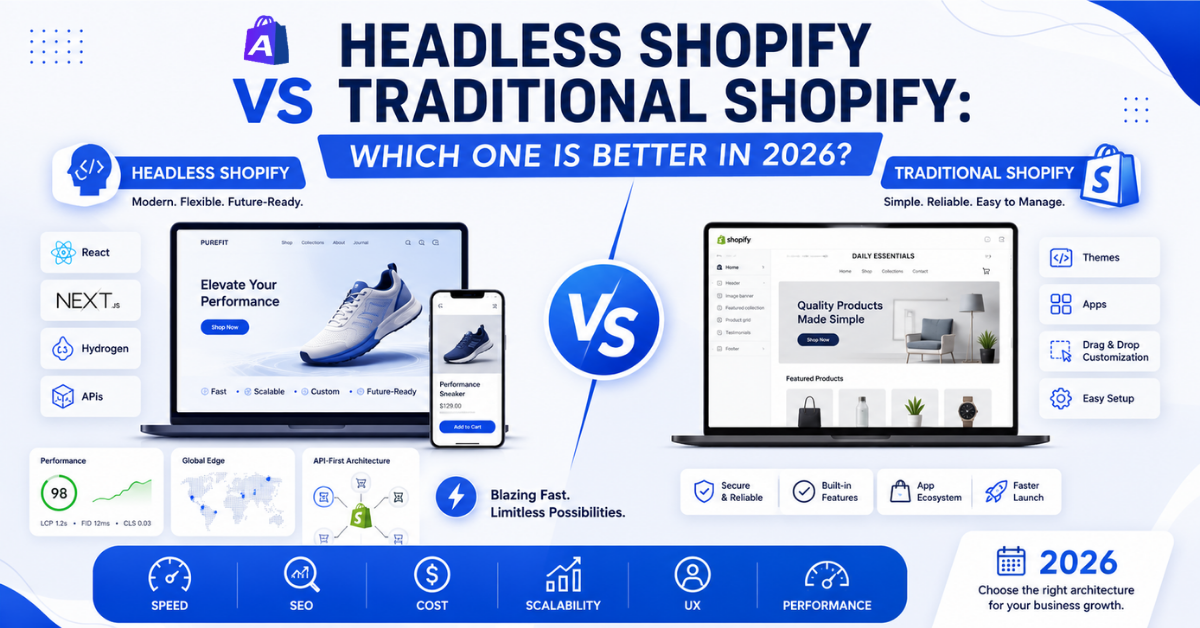
Check this table if you want to understand both the Shopify development side by side.
| Feature | Traditional Shopify | Headless Shopify |
| Speed | Good | Excellent |
| SEO | Good | Better Control |
| Flexibility | Limited | Highly Customizable |
| Cost | Lower | Higher |
| Scalability | Moderate | High |
| Development Time | Faster | Longer |
| User Experience | Standard | Premium |
| App Ecosystem | Full | Limited |
| Maintenance | Easy | Complex |
Here is what the data shows on headless Shopify vs Shopify Plus for SEO: 60% of Liquid theme stores pass all Core Web Vitals (CrUX Technology Report, Spring 2026). That is a strong result. Headless can do better, but only when implemented well.
A poorly built Hydrogen store will underperform an optimized Liquid theme. The framework does not guarantee performance. The engineering does. What Headless does give you is more control over Shopify performance optimization: fine-grained data fetching, streaming server-side rendering, and the ability to remove third-party scripts your theme has accumulated.
For SEO-focused builds, headless wins on:
For Shopify website speed optimization on traditional stores, auditing and removing unused apps often delivers 80% of the performance benefit at zero development cost. A 0.1-second improvement delivers an 8.4% conversion lift, according to Deloitte.
Traditional Shopify vs headless commerce is an easy call for most businesses. Choose traditional Shopify if:
For these businesses, a well-optimized Liquid theme with fast Shopify speed optimization is the most cost-effective choice available.
When to choose headless Shopify comes down to the growth stage and technical needs. Here are the perfect headless commerce examples for you:
Headless Shopify for enterprise brands is where the ROI math works. At ₹80+ crore in revenue, even a 1% conversion rate improvement from better performance translates to ₹80+ lakh in annual gains. For Shopify custom development at this scale, the investment pays back quickly.
This cost comparison is an estimated breakdown. You might get a little bit higher or lower quotes from a custom Shopify development company. Check here:
| Cost Type | Traditional Shopify | Headless Shopify |
| Development | ₹25K to ₹2L | ₹15L to ₹40L+ |
| Monthly Maintenance | ₹5K to ₹20K | ₹50K to ₹2L+ |
| Hosting | Included | Oxygen (free) or Vercel |
| App Costs | ₹10K to ₹50K/month | Lower (APIs replace apps) |
| Time to Launch | 1 to 4 weeks | 3 to 6 months |
For Shopify Plus development projects going headless, long-term costs can be lower than traditional builds because API integrations replace 5 to 10 paid apps. But the upfront investment is significantly higher.
All three chose headless Shopify for ecommerce not because it is the latest trend, but because their business outgrew what traditional themes could deliver.
Appco Software is one of the best Shopify development companies in Jaipur, India. We have been working as a Shopify expert agency since 2013. We are also a certified Shopify Partner, having years of experience building both traditional and headless Shopify stores for D2C and enterprise brands.
For brands on traditional Shopify, our Shopify speed optimization team audits themes, removes app bloat, and brings Core Web Vitals scores into the top tier. Our Shopify theme development services cover full custom builds with section-level control and fast load times out of the box.
For brands ready for headless, our Shopify custom development team builds Hydrogen-based storefronts with full API integration. We also handle Shopify store migration from traditional to headless without losing data or SEO rankings. For growth, our performance marketing team ensures your new store gets the traffic it deserves from day one.
The best Shopify architecture for ecommerce is neither headless nor traditional. It is the one matching your current revenue, team capability, and growth plan.
Not always. Headless gives better speed and design control but costs more. Traditional Shopify is the best choice for most small and mid-size businesses.
For stores pulling ₹5 crore or more monthly, yes. For smaller stores, a well-optimized traditional Shopify setup gives you way better value for money.
Only if built correctly. Server-side rendering and fast LCP help rankings. A poorly built headless store can actually damage your SEO more than a good Liquid theme.
High development cost, 3 to 6 months build time, need for React developers, limited app compatibility, and higher ongoing maintenance costs compared to traditional Shopify.
Technically, yes, but it is rarely useful for them. The cost and complexity do not match small business budgets. Traditional Shopify with a fast custom theme is the better option here.
Hydrogen is Shopify’s React framework for headless storefronts. Oxygen is the free edge hosting platform that deploys your store across 285+ global locations for fast load times.
It takes around 3 to 6 months, depending on catalog size and integrations. Your backend data stays safe. Only the front end gets rebuilt from scratch.

Appco Software has been around for a very long time, helping startups and established brands build iconic websites and apps. For your unique idea to be presented in a beautiful way, contact us now!