AI-generated content has been around for some time now. Since the digital space is expanding, AI-generated content is growing at a crazy speed. With tools like ChatGPT, Gemini, and Claude, content creation is now easier. And anyone with these tools can generate thousands of words in no time. From blog posts to product descriptions to social media content and web copy, AI is changing everything. Within seconds, you can create content, but the real challenge is making sure that the content is 100% accurate.
In 2025, Google’s algorithms, the giant search engine, will prioritize human-like, valuable content over generic AI content. So now, the question remains on the table: how do you ensure that you’re providing real value, and the content you produce with these tools can help people in their day-to-day lives?
AI-generated content is exactly what it sounds like — content written by advanced tools like ChatGPT, Google’s Gemini, or Claude by Anthropic. These platforms are powered by something called Large Language Models (LLMs), which have been trained on massive amounts of text, from books and blogs to everyday web content. Their job is to understand your prompts and create content that makes sense. Thanks to their natural language processing (NLP) abilities, these tools can read, write, and respond in ways that feel almost human. That’s why AI content creation is booming right now — from writing blog posts and emails to generating social media AI content in seconds.
When OpenAI launched GPT-3 back in 2020, it completely changed how we interact with information. It was a major leap in the world of AI and natural language processing (NLP). Fast forward to today, and these powerful language models, like ChatGPT, Claude, and Google’s Gemini, don’t just write content anymore. They can browse the web in real-time and serve up fresh, relevant answers without users even touching a search engine.
This shift has had a big impact on SEO and digital marketing as a whole. From how we create content to how we track user behavior and choose keywords, everything’s evolving.
One of the biggest changes is that people are getting their answers directly from AI-generated content through tools like AI-powered search assistants and Google’s AI overviews. As a result, traditional website clicks are dropping. In fact, according to a Gartner report, search engine volume is expected to drop 25% by 2026 due to the rise of AI chatbots and other virtual agents.
Google isn’t against AI-generated content. Google is pretty clear about it. Whether your content is written by a human, an AI tool, or a mix of both, it can still rank on Search. But there’s a catch: your content must meet Google’s quality standards. If yes, you’re good to go.
That means your content must have these core principles of E-E-A-T, which are expertise, experience, authoritativeness, and trustworthiness. So even if you’re using AI content tools like ChatGPT or Gemini, what matters most is how valuable and unique your content is. If your AI-generated posts offer real insight and are accurate, you’re on the right track to rank higher in Google search results.
Google’s top priority is pretty simple: show users the most helpful, high-quality content out there. That’s exactly why they created the E-E-A-T framework (Expertise, Experience, Authoritativeness, and Trustworthiness) to guide how content is ranked in search results.
Whether it’s written by a human or created using AI content tools, what matters is value. If your content is people-first, original, and answers real questions backed by useful info, it has a much better chance of ranking well. Unfortunately, many people have used AI-generated content just to game the system, stuffing it with keywords but offering no real insight. That’s where Google draws the line.
Publishing AI-generated posts just for the sake of search engine rankings — without considering the user’s intent — goes against Google’s spam policies. And more often than not, this kind of AI-generated text doesn’t hold up to scrutiny. It’s generic, lacks depth, and doesn’t provide any meaningful help to the reader.
But here’s the good news: AI and digital marketing can work together, if you do it right. AI in digital marketing isn’t about replacing humans; it’s about enhancing the process. If your AI-generated content is informative, well-structured, and aligned with what people are searching for, Google will still reward it.
Google doesn’t say AI is bad. It just says the content has to be good. That means useful, relevant, and written with the user in mind. Meeting E-E-A-T standards is crucial, especially as AI development companies roll out more powerful tools every day.
In some areas, AI content creation makes a lot of sense. Think sports scores, financial updates, or weather reports, places where the focus is on delivering factual data fast. AI-generated text works well in these cases because users care more about the information than the voice behind it.
For content writers and marketers, AI content tools can also be incredibly helpful. If you want some new ideas or want to research on the topics, AI can help you simplify the task. And speed up things, without even sacrificing quality.
If you want to stand out in this new era of AI and digital marketing, focus on clarity, originality, and relevance. Don’t rely solely on bots — use them to support your expertise. That’s how you stay authentic and rank higher, even in a space dominated by artificial intelligence in social media and search.
By combining smart strategy with the right digital marketing AI tools, you can strike the perfect balance between efficiency and authenticity.
As AI-generated content becomes more common in blogs, websites, and even social media, many platforms and search engines are stepping up to detect what’s human-made and what’s machine-written. But now, you can use AI content detection tools to check if the content is written by a machine or a person. These AI tools are so smart at detecting content created by tools like ChatGPT, Gemini, and other AI content creation systems.
So, how do these detectors actually work? Let’s break it down in a simple way:
AI detectors scan your content and compare it with tons of human-written articles, blogs, and social posts found online. If your AI-generated text matches patterns that seem too robotic or lacks natural flow, it raises a red flag.
Machines love to repeat themselves. If your content follows the same sentence structure, overuses certain phrases, or feels perfect, AI detection tools can often tell it wasn’t written by a human. That predictability is one of the biggest points.
That’s why, even when using AI content tools, it’s crucial to revise and polish the draft to sound more natural. A blend of human voice, personal insight, and value-driven storytelling helps you beat detection and connect with readers — and it’s exactly what Google’s SEO systems are looking for in 2026.
If you’re a marketer using digital marketing AI tools or a creator posting with artificial intelligence social media strategies, the goal remains the same. You need to be real, be helpful, and always think human-first.
AI-generated content is here to stay. From content writing AI tools like ChatGPT, Gemini, and Claude to AI development companies building smarter systems every day, artificial intelligence is changing how we write, post, and engage. But if your AI content sounds robotic or lacks emotion, your audience — and Google — will lose interest fast.
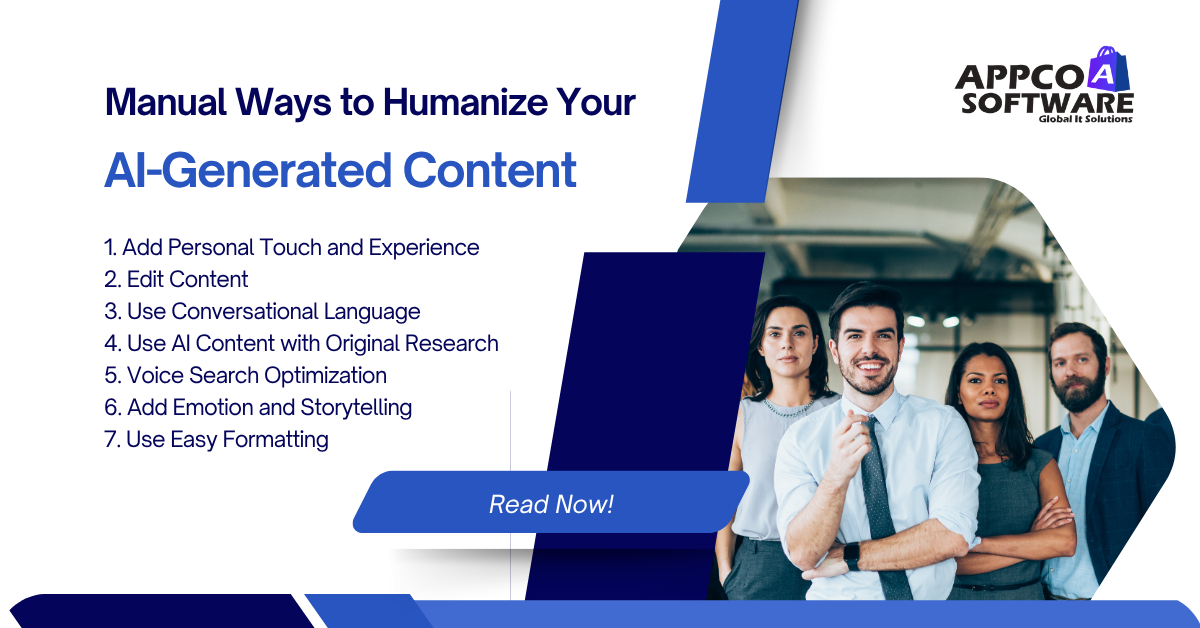
Here’s how you can make your AI-generated posts feel more human, without losing the power of automation:
AI can write facts, but it can’t tell your story. You, as a human, can add your personal experiences, opinions, and real-life examples to the content. Whether you’re writing for a blog or social media, this helps build authenticity and meets Google’s E-E-A-T (Experience, Expertise, Authoritativeness, Trustworthiness) criteria. And quality is equal to more traffic from Google.
Raw AI-generated text often lacks emotional depth, in most cases. When AI gives you the final output, take some time to check the content. You can smooth the flow, add empathy, tweak the tone, and make it sound like it was written by someone who knows what He/She is writing about.
Your audience doesn’t want to read like they’re studying a textbook. Instead, use a very natural and casual language. Throughout this article, you’ve noticed that I’m writing like I am talking to you in person. This helps in both user engagement and semantic SEO, as your content aligns better with real voice queries and search intent.
Use AI content tools to draft, but back up your work with real data, statistics, or quotes from experts. In this way, you will be sure that you’re publishing the right data. You must double-check the facts, numbers, and statements.
More people are using voice assistants to search — which means content must match natural speech patterns. Tools that support voice search optimization in digital marketing can help your AI-written posts show up in these voice-based queries.
Storytelling makes content stick. Add a short anecdote, a personal win (or failure), or an emotional hook at the start. It doesn’t matter if your draft came from AI content creation; the human element must come through to connect.
Nobody wants to read a wall of text. Break up content with subheadings, bullet points, and visuals. Even AI in digital marketing can help identify content gaps or suggest better layouts, but it’s on you to format for the human eye.
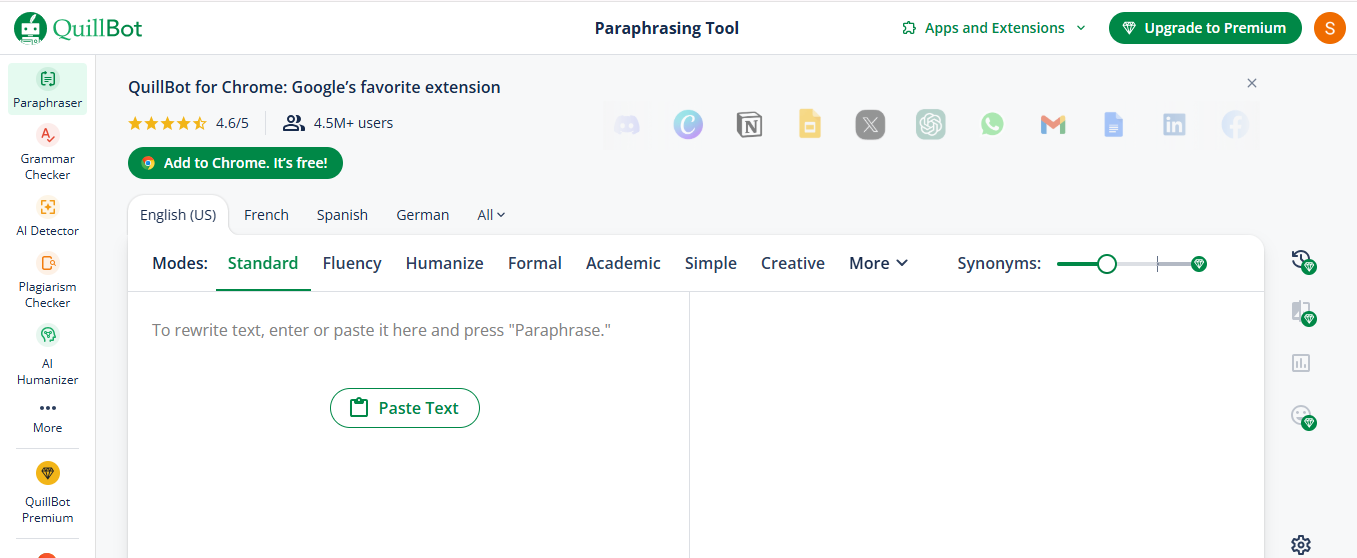
Quillbot is another great example of paraphrasing AI content. With this very specific tool, you can rewrite the content in different styles and modes, like Fluency, Standard, Creative, Simple, Formal, and many others. Also, Quillbot will help you with fixing the grammar issues, if any.
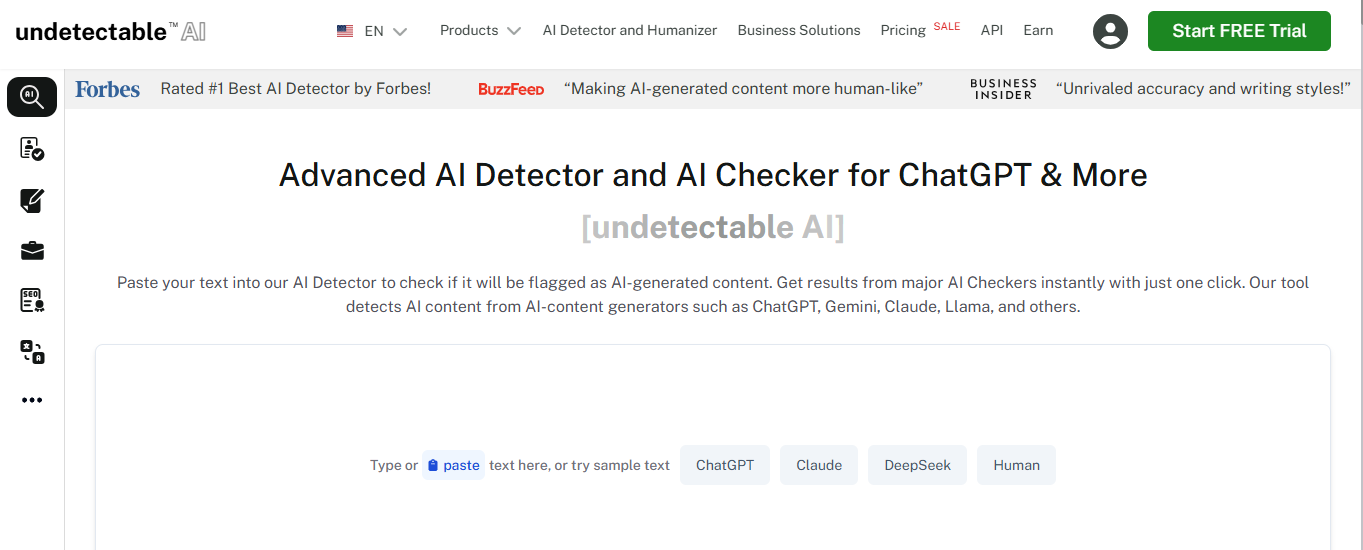
Undetectable dot ai is also a paraphrasing tool, which is famous among many content creators. You can rewrite your AI-generated content in a human-like style. This tool reproduces the content using different words and structures, helping you bypass the AI content detection tools.
This is very funny. You can ask ChatGPT to rewrite its own content humanely. If you tell ChatGPT that your previously written content is showing 100% AI content, ChatGPT will help you rewrite the same content in a different style. You can also provide ChatGPT with your writing style and tone, so that it can understand how you write.
As AI-generated content becomes more common, the effort to make it truly human-like is only growing. Both search engines and real readers are getting better at recognizing content that sounds robotic or generic. And we expect better. That means we’ll likely see smarter AI tools that not only write but sound like us, with a natural flow, emotional nuance, and real depth.
Plus, as AI detectors get sharper, creators will have to spend more time improving what they publish. This could lead to a new wave of tools, not just to write, but to rewrite and refine AI content.
Absolutely not. Google doesn’t penalize you just for using AI-generated content. But if that content seems spammy, lacks originality, or doesn’t really help users, your rankings might suffer.
Well, AI-generated content isn’t bad, as long as you’re using it carefully. But it also depends on how you use AI content. And if not done correctly, it can harm your SEO efforts.
Add your touch, style, and tone. You can also hire a professional content writer who will help you write 100% original and error-free content.
E-E-A-T stands for Experience, Expertise, Authority, and Trustworthiness. And yes, Google takes it seriously. These are the qualities that help your content rank higher.
To humanize AI content, you need to use your own style, tone, and words. Also, you can edit the AI content until it shows 0% AI content. Also, you can use some online AI content humanization tools like Quillbot and Undetectable.ai.
Well, if your content is unique and if it provides valuable information, your AI-generated content will automatically rank higher on Google. But, make sure you add your personal touch to the content to make it look human-like.

Appco Software has been around for a very long time, helping startups and established brands build iconic websites and apps. For your unique idea to be presented in a beautiful way, contact us now!