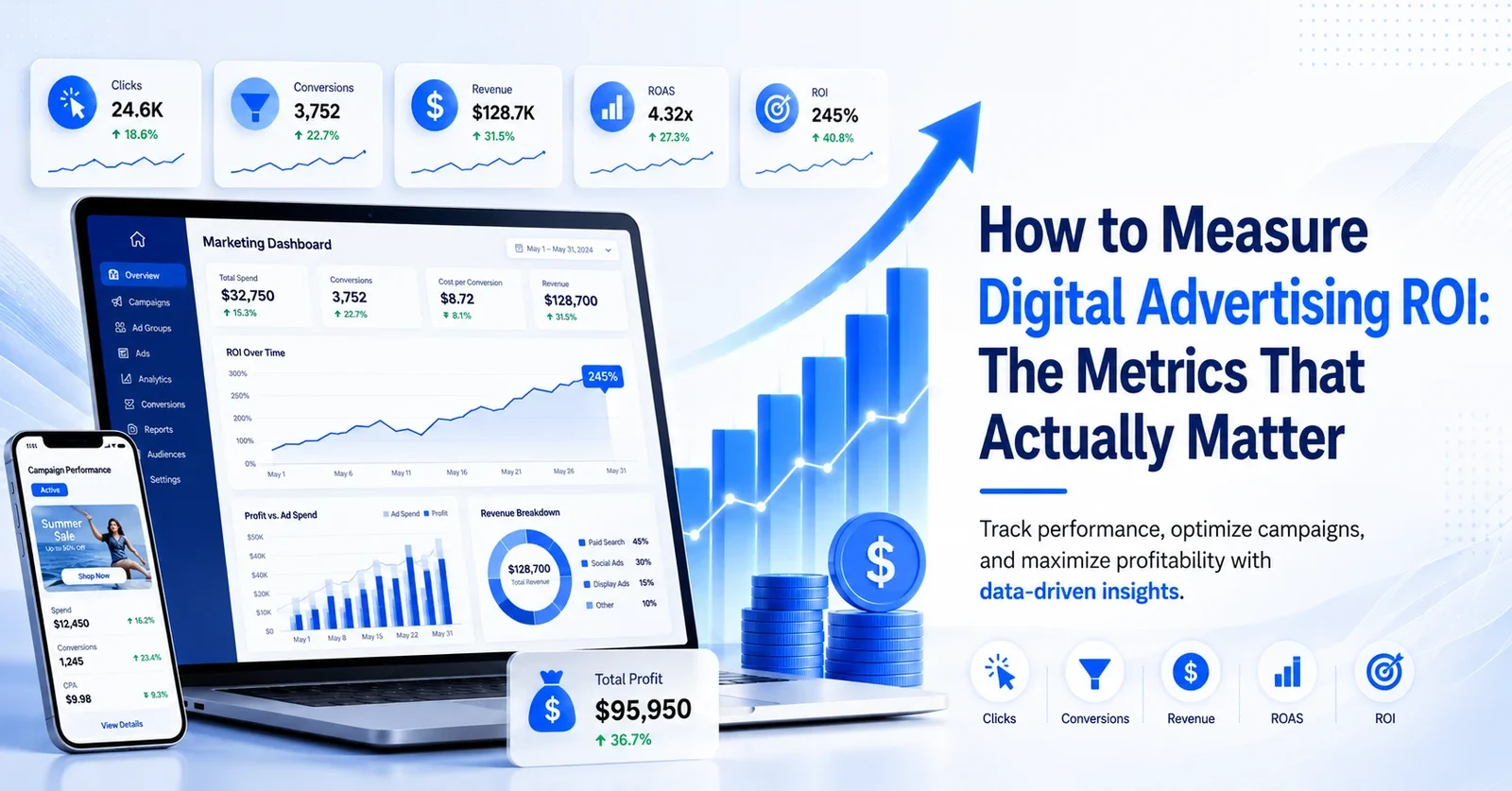
For every ₹1 you spent on digital ads last month, how much came back?
If you cannot answer that, you are not alone. Most businesses track ad activity, not ad results. Clicks, reach, impressions. None of those pays salaries, but revenue does. Learning how to measure ROI for digital ad spend tells you which campaigns are making money and which ones are draining your budget without anyone noticing.
Having said that, we are going to discuss this topic in detail today. You will get to know every single metric/detail to check yourself.
ROI means Return on Investment. These are three words. But if you don’t understand them clearly, you are not going to make huge sales.
Let us ask one simple question: Did the money you spent come back?
Most people running ads never answer this. They look at clicks, reach, and cost per click. The dashboard looks active, so they assume the campaign is working. When weeks go by, the budget goes out. And the revenue number barely moves.
That is where knowing how to calculate advertising ROI changes things. It does not matter how many people clicked your ad. It matters how many of them bought something. And whether what they bought was worth more than what you spent to reach them.
An ad account can look healthy and still be losing money every single month. A campaign spending ₹80,000 and generating ₹60,000 in revenue is not a traffic problem. It is a profit problem. And you would only know that if you were measuring the right number. ROI is that number.
Also Read – What Is Performance Marketing?
The ad spend ROI calculation is very simple:
ROI = (Revenue − Advertising Cost) ÷ Advertising Cost × 100
Example:
A 300% ROI means you got back ₹3 for every ₹1 spent on advertising. Anything above 0% means the campaign made more than it cost. Below 0% means it lost money.
Also Read – Best Platforms for Performance Marketing
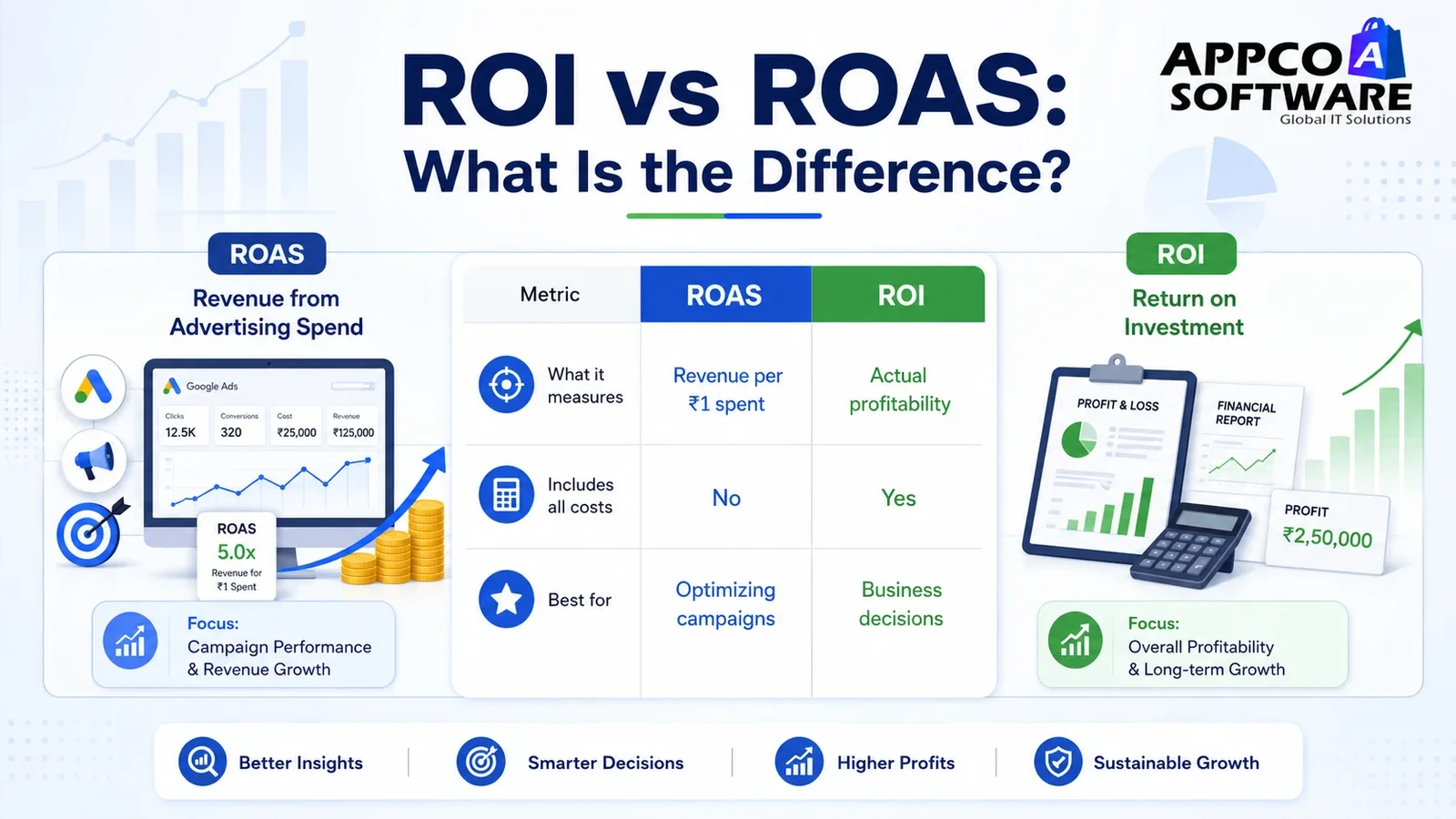
Most marketers use ROAS and ROI as if they mean the same thing. They do not. And mixing them up leads to keeping campaigns running that are losing money.
ROAS, or return on ad spend, only tells you one thing. How much revenue came back for every rupee spent on ads.
ROAS = Revenue ÷ Advertising Spend
Take the same example from above. ₹2,00,000 revenue divided by ₹50,000 ad spend gives you a 4x ROAS. Meaning every ₹1 spent on ads brought back ₹4 in revenue. On paper, it looks excellent.
But here is what ROAS does not show you.
Once you subtract all of that from the ₹2,00,000, the number left might be far less than the ₹50,000 you spent on ads.
A campaign with a strong ROAS vs ROI difference is one of the most common reasons brands keep scaling budgets that are not profitable. The revenue is real. The profit is not. ROI accounts for all of it. ROAS accounts for none of it. Both numbers matter. Just not for the same decisions.
| Metric | ROAS | ROI |
| What it measures | Revenue per ₹1 spent | Actual profitability |
| Includes all costs | No | Yes |
| Best for | Optimizing campaigns | Business decisions |
Use ROAS to compare campaigns day to day. Use ROI to decide whether advertising is actually growing your business.
Also Read – AI In Performance Marketing 2026
Most businesses are losing money on ads they think are not working. And the reason is usually wrong marketing attribution models, not bad ads.
Indian brands spending Rs. 50,000 to Rs. 5,00,000 on ads every month should be using data-driven attribution in GA4. Because at that budget, running on wrong data is not a small problem. It is an expensive one.
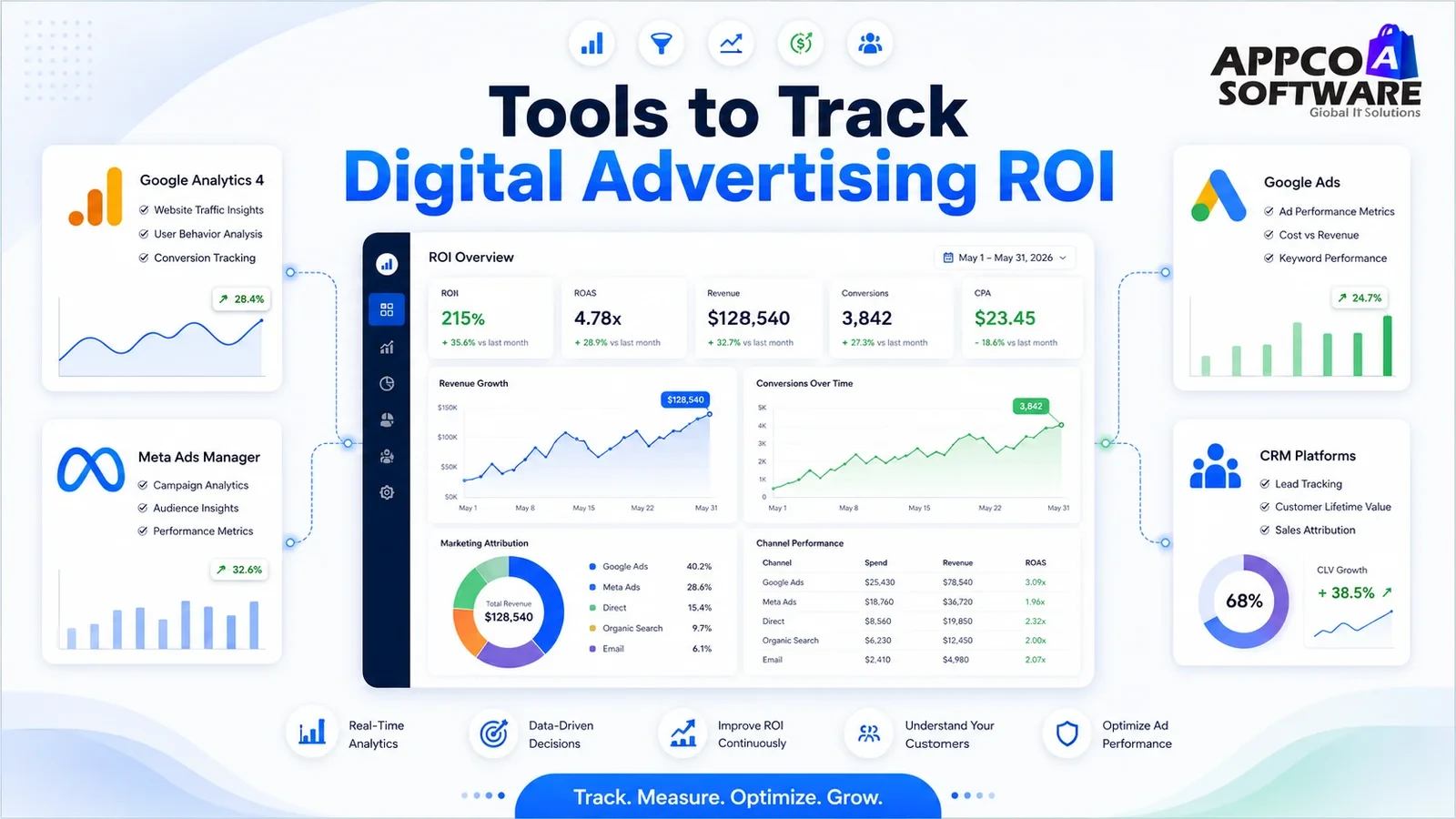
Most people set up GA4 and never really use it properly. But for paid media performance tracking, this is the tool that tells you what is happening. Add your conversion events, put revenue values against them, check the attribution reports. Free to use and there is really no excuse to skip it if you are spending money on ads.
Google Ads ROI tracking does not work if your conversion actions are set up wrong. A lot of brands track clicks and call it a day. The actual setup needs to be tied to purchases or lead completions. Connect it to GA4 and suddenly you can see revenue per campaign, cost per conversion, ROAS, all in one place. Our Shopify store development gets this done from day one so you are not guessing later.
Facebook Ads ROI tracking has gotten more complicated since 2024. Browser restrictions have made the Meta Pixel less reliable than it used to be. Server-side tracking through Conversions API gives cleaner data now. Set up your purchase events, assign values, and Meta shows you ROAS by ad set and creative. That part still works well when the tracking foundation is right.
HubSpot and Salesforce are for brands where a lead today might become a paying customer two months from now. Google Ads gets no credit for that sale unless your CRM is connected to your ad data. For B2B, especially, this gap costs a lot in wrong decisions. Our Shopify custom app development team builds these integrations for stores that need to track the full journey from first ad click to closed deal.
Good PPC ROI measurement follows this sequence:
Also Read – Benefit From A Performance Marketing Agency
A lot of brands look at clicks and feel good about their campaigns. But clicks don’t pay salaries. A campaign with 10,000 clicks and zero purchases has done nothing for the business.
Some customers buy once. Some buy every month for three years. If you are judging ROI only on the first purchase, your best acquisition campaigns are going to look like failures. And you will end up cutting the ones that were working.
Last-click attribution is the most common mistake. The awareness campaign that introduced your brand gets zero credit because someone clicked a retargeting ad right before buying. Also worth knowing: if your Shopify store rebuild improved your conversion rate, your ad ROI also changed.
A lot of Indian businesses still take orders on WhatsApp or over calls. Those sales came from somewhere. If you are not tracking that, a big chunk of your ad revenue is invisible, and your ROI numbers are wrong from the start.
New campaigns need time. Three to four weeks at a minimum before you start making decisions. Cutting a campaign in week one because ROAS looks low is one of the most expensive mistakes brands make, and most of them do it anyway.
To genuinely measure ROI for digital ad spend and then improve it, work on these areas:
Also Read – Top 5 Performance Marketing Agencies in India
| Channel | Typical ROI Potential | Best For |
| Google Search Ads | High | High-intent buyers |
| SEO | Very High (long-term) | Organic growth |
| Meta/Facebook Ads | Medium-High | D2C and awareness |
| LinkedIn Ads | Medium | B2B lead generation |
| Email Marketing | Very High | Retention and repeat |
| Retargeting Ads | High | Warm audiences |
For long-term ROI, our Shopify SEO services consistently outperform paid channels over 12 months because organic traffic has near-zero marginal acquisition cost once rankings are established.
Brand awareness campaigns, new product launches, and market expansion efforts often show low ROI in the first 90 days. That does not mean they are failing. Look at:
Not every campaign is designed to generate immediate revenue. But every campaign should have defined metrics to prove it is contributing to the overall business outcome.
Also Read – Boosting Your Shopify Store’s Performance
To calculate ROI, there is a very simple formula. Revenue minus ad cost, divided by ad cost, multiplied by 100. Spend Rs. 50,000, earn Rs. 2,00,000, and your ROI is 300%.
For ecommerce in India, 200 to 400% is considered strong. High-margin products can survive lower ROAS.
ROAS measures revenue per rupee spent. ROI measures actual profit. A 5x ROAS can still mean negative ROI if product cost, shipping, and fees eat everything up.
You can use GA4 for multi-channel attribution. Google Ads for PPC. Meta Ads Manager for Facebook and Instagram. HubSpot or Salesforce for B2B.
Wrong attribution means you cut campaigns that were actually working and scale ones that were not. Data-driven attribution in GA4 fixes most of this.
Not directly. But track brand search volume, organic traffic growth, and return visitor rates. These tell you if awareness is building an audience that converts later.
Error: Contact form not found.

Appco Software has been around for a very long time, helping startups and established brands build iconic websites and apps. For your unique idea to be presented in a beautiful way, contact us now!