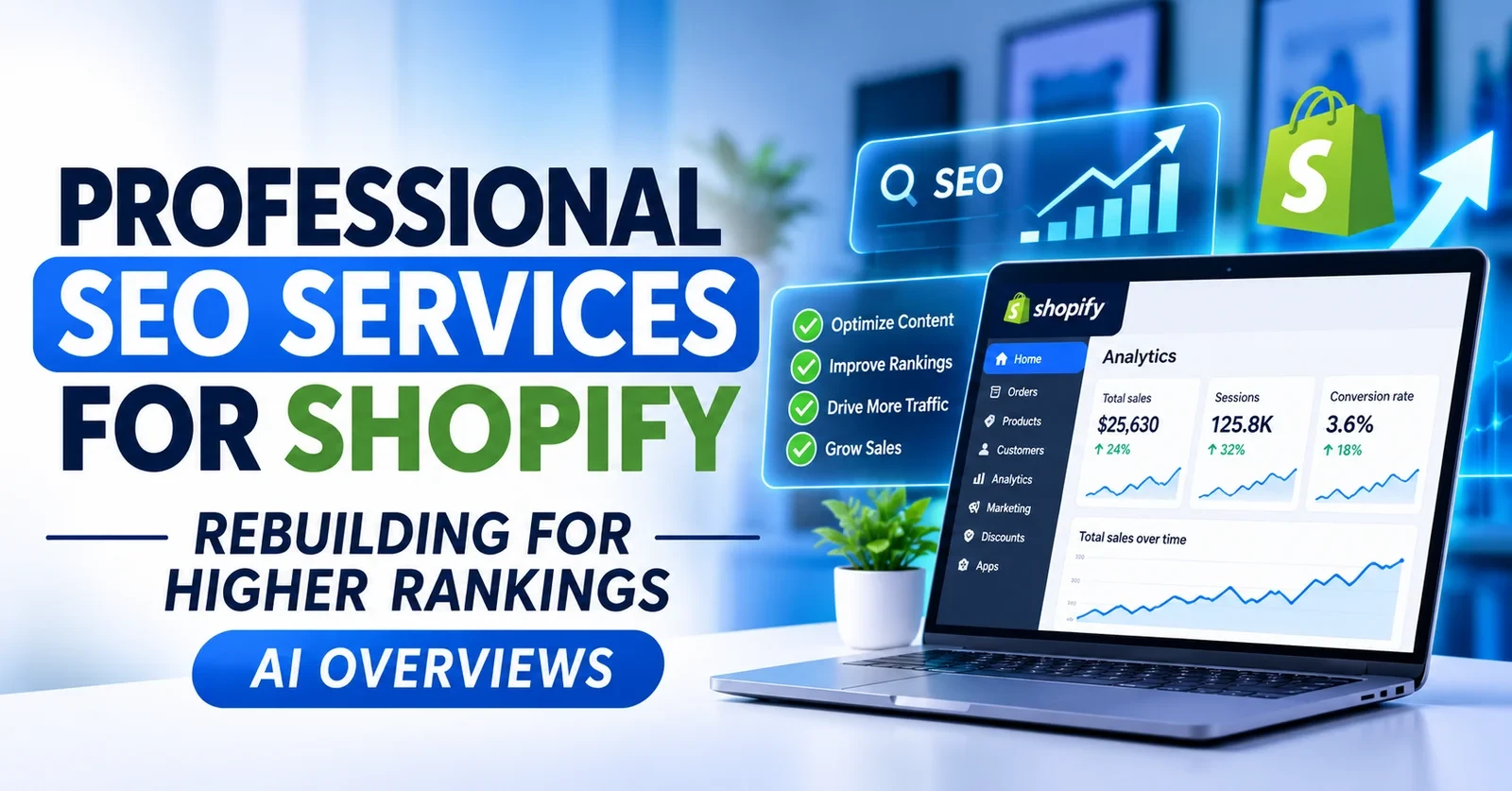
Professional SEO services for Shopify stores now cover two jobs at once: making product and collection pages rank in classic search, and making the store’s information clear enough to be summarized and cited in Google AI Overviews and other AI answers. The technical basics have not changed much, but some agency packages now add structured data audits, entity cleanup, and AI answer monitoring to the usual list.
Shopify handles a lot out of the box, which is part of the appeal. It also creates a few predictable SEO issues, from duplicate product paths to thin collection pages. This guide walks through what a strong Shopify SEO engagement covers in 2026 and what to ask an agency before signing.
Shopify gives every store a solid starting point. According to Shopify’s help center, all stores automatically generate a sitemap.xml file with links to products, primary product images, pages, collections, and blog posts. Merchants can edit page titles, meta descriptions, and image alt text from the admin.
The platform does not decide which pages deserve to rank, write useful product copy, or resolve the quirks that come with themes and apps. Those gaps are where most Shopify SEO work happens.
Product pages carry the buying intent, while collection pages often target broader category searches. Both need unique titles, clear descriptions, and enough helpful content to stand apart from competitors selling similar items. Manufacturer descriptions copied across many stores give search engines little reason to choose one page over another.
Depending on the theme, a single product can be reachable through more than one path, such as a standard product URL and a version nested inside a collection. Variants for size or color can add more URLs. Google’s guidance on consolidating duplicate URLs explains how rel=”canonical” annotations and consistent internal linking help it pick the preferred version. An audit should confirm that canonical tags point where they should and that internal links use the preferred URL.
Every app added to a store can load its own scripts. Over time, unused apps and heavy theme features slow pages down. A professional audit usually reviews installed apps, image sizes, and theme code alongside performance reports in Google’s tools.
Shoppers can now get product comparisons, category overviews, and buying advice directly from AI Overviews, AI Mode, ChatGPT, Perplexity, and Gemini. A store that ranks well can still be left out of those summaries if its pages lack clear, specific information.
Google’s guidance on AI features and your website says there are no special requirements to appear in AI Overviews or AI Mode beyond being indexed and eligible to appear in regular Search. That keeps the foundation familiar: crawlable pages, helpful content, and sound technical health. The difference lies in how agencies prioritize and measure the work.
Product pages that clearly state materials, dimensions, compatibility, care instructions, and shipping or return details give AI systems specific facts to work with. Vague marketing copy does not.
Packages vary, but many professional engagements for Shopify stores include some version of the components below.
Crawlability, indexing, canonical tags, redirects for discontinued products, sitemap health, site speed, and mobile usability. This is the foundation everything else depends on.
Product structured data helps search engines read prices, availability, and ratings. Google’s documentation on Product structured data separates two types: merchant listings for pages where customers can buy, and product snippets for pages where they cannot, such as editorial reviews. It notes that this markup can help product information like price, availability, and review ratings appear more prominently in search results. Some Shopify themes include product markup by default, so an audit should check what is already there before adding apps that may duplicate it.
Customer reviews add fresh, specific text to product pages and can support rating information in search results when marked up correctly. The review app, theme, and structured data need to work together so ratings are not missing or duplicated.
Unique product copy, collection page introductions that help shoppers choose, and buying guides that answer common questions. Content that answers questions directly is also easier for AI answers to quote.
This is the newer layer. Agencies run sets of shopping prompts through AI assistants, record whether the store or its products appear, note which sources are cited, and track changes over time. They then connect findings back to content, structured data, and outside sources.
AI answers about a brand can draw on reviews, forum threads, and news coverage, not only the store’s own pages. For that reason, some agencies fold review management and brand monitoring into SEO packages. Appco Software & NetReputation, for example, offers SEO alongside reputation services, which suits stores where off-site reviews and mentions shape how the brand is described.
| Component | What It Covers on Shopify | What to Ask an Agency |
|---|---|---|
| Technical audit | Canonicals, redirects, sitemap, speed, apps | How do you handle collection and variant URLs? |
| Structured data | Product markup, merchant listing fields, ratings | What markup does my theme already output? |
| Product content | Unique descriptions, specs, FAQs | Who writes copy, and how is it reviewed for accuracy? |
| Collection content | Category introductions, filters, internal links | How do you avoid thin or duplicate collection pages? |
| Reviews markup | Rating display, review app integration | Will ratings be marked up without duplication? |
| AI answer visibility | Prompt tracking across AI assistants | Which assistants do you check, and how often? |
| Reporting | Rankings, traffic, AI mentions, cited sources | Do reports include raw AI answers and cited URLs? |
Google’s AI features guidance notes that sites appearing in AI Overviews and AI Mode are counted in the overall Web search traffic in Search Console’s Performance report. That makes it impossible to separate AI feature traffic from regular results in that report alone.
Agencies fill the gap with prompt tracking. A useful prompt set for a store mixes category questions, product comparisons, problem questions (e.g., which product suits a specific need), and brand questions. Each prompt runs across several assistants on a regular schedule, with results saved and compared against a baseline.
Reports should show whether the store appears, which products are mentioned, what sources are cited, and whether descriptions are accurate. Pairing that with Search Console, analytics, and sales data gives a fuller picture than any single source.
A few questions quickly separate thorough agencies from generic ones.
Teams comparing providers may find it useful to review how SEO services for ecommerce brands are typically scoped, then hold every proposal to the same checklist.
Store owners can handle many basics themselves: writing titles and meta descriptions, adding alt text, and keeping products organized. Outside help adds the most value where judgment and technical depth matter.
That includes diagnosing why products are not indexed, cleaning up duplicate URLs, untangling structured data conflicts between themes and apps, and building content that answers real shopper questions. It also includes the newer AI visibility work, which needs consistent prompt tracking and the ability to connect findings to fixes.
For stores weighing outside support, professional seo services that combine Shopify technical work with AI answer monitoring and reputation signals cover more of the ground that now affects visibility.
Shopify SEO in 2026 still rests on clean technical foundations and useful product content. What has changed is the scope of a professional package, which now reaches into structured data accuracy, reputation signals, and how AI answers describe the store.
They usually include a technical audit covering canonicals, redirects, site speed and apps, structured data review, product and collection content, reviews markup, and reporting. In 2026, some packages also add AI answer visibility work, such as tracking whether products appear in Google AI Overviews, ChatGPT, and Perplexity, and which sources those answers cite.
Partly. Shopify automatically generates a sitemap and lets merchants edit titles, meta descriptions, and alt text. It does not write product content, choose which pages should rank or resolve theme and app issues such as duplicate paths or conflicting markup. Those tasks still need hands-on SEO work from the store team or an agency.
Google says there are no special requirements beyond being indexed and eligible for regular Search. In practice, clear product information, helpful collection and guide content, accurate structured data, and a crawlable site improve the chances that a store’s pages are useful to AI features. No agency can guarantee inclusion in AI Overviews.
Yes. Google’s Product structured data documentation says this markup can help price, availability, and review ratings appear more prominently in search results. Some Shopify themes output product markup by default, so stores should audit what exists before installing apps that may add duplicate or conflicting product data.
Look for steady improvement in indexed product pages, rankings for category and product searches, organic revenue, and AI answer mentions over several reporting cycles. Reports should include raw AI answers and cited sources alongside Search Console and analytics data. Clear explanations of what changed and why matter more than any single score.
Error: Contact form not found.