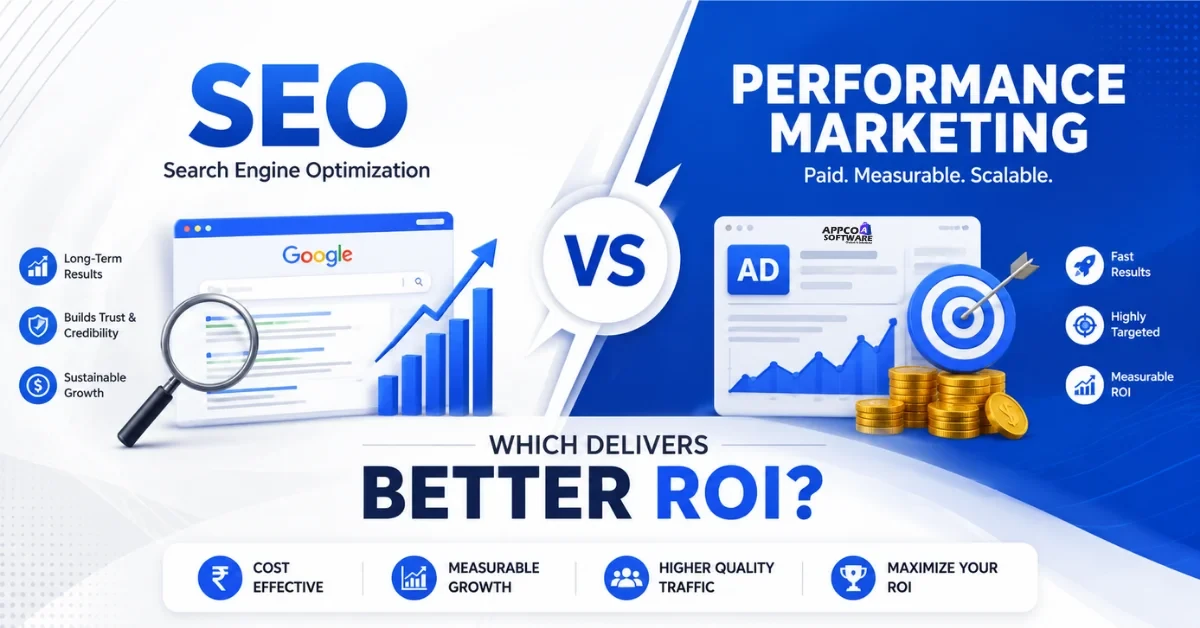
At some point, every business owner asks this. SEO or paid ads? Where should the money go?
Both cost something. Both take time. And everyone selling either one will tell you theirs is the better choice. So, most business owners end up more confused after the conversation than they were before it.
The SEO vs performance marketing debate does not have one right answer. It depends on how fast you need results. How much budget do you have? What kind of business are you running? And where are you right now in terms of growth?
This guide breaks both down properly so you can figure out what makes sense for your situation, not someone else’s.
Search Engine Optimization (SEO) is simple at its core. Someone types something into Google. Your website shows up. That is the whole idea.
Let’s say someone searches for a Shopify development company in India. The businesses on page one did not get there by accident. Someone worked on it. That work is SEO.
But Google is not where all searches happen anymore. In 2026, a lot of people will open ChatGPT or Gemini and just ask.
They get an answer and never open a browser tab. If your brand is not in that answer, you missed the customer completely and never even knew they were looking.
SEO as a discipline covers several areas. Technical SEO is about site speed, crawlability, and structure. Our Shopify SEO services cover this for ecommerce stores. Content means building pages and articles around what your customers are searching for. Local SEO puts you in front of people nearby who are ready to act. Authority building is about getting other websites to mention you so Google treats you as a credible source.
Performance marketing means you run paid ads and pay based on what happens. A click, a lead, or a sale.
Most of it runs on a pay-per-click model. Someone searches your keyword, your ad shows up, they click, you pay. Simple enough. But the moment your budget runs out, or you pause the campaign, the traffic stops.
Here is the SEO or performance marketing comparison table. Check carefully to understand it better:
| Factor | SEO | Performance Marketing |
| Results Speed | Slow, 6 to 12 months | Fast, same day |
| Cost Over Time | Goes down as rankings build | Stays high or increases |
| Trust Factor | High, organic results feel credible | Medium, people know it is an ad |
| Lead Quality | High buying intent | Depends on targeting |
| ROI Timeline | 6 to 12 months | Immediate |
| Brand Authority | Builds over time | Limited |
| AI Search Visibility | Yes, with the GEO strategy | No |
| Stops When Budget Stops | No | Yes |
This is where SEO vs PPC for lead generation gets interesting.
When someone searches for a Shopify development company in Jaipur on Google and clicks your website, that person is actively looking for what you offer right now. They have a problem. They are looking for a solution. The buying intent is already there. These leads close faster and at a better rate.
When someone sees your ad on Instagram while scrolling through their feed, they are not looking for you. You interrupted them. They might click out of curiosity. But the intent is completely different. You can still convert them, but it takes more effort and the journey is longer.
SEO for lead generation brings in people who are already searching. Performance marketing for lead generation reaches people who were not searching but might be interested. Both have their place, but the quality difference is real.
Let us put some actual numbers to this.
If you are asking this question, you are probably already spending on ads and wondering why the cost keeps going up without the results going up with it.
Agencies, consultants, law firms, service businesses of any kind. Their customers type something into Google before calling anyone. Ecommerce SEO works well here because the search intent is already there. B2B buyers are even more research-heavy. They read, compare, and look at multiple sources before a single conversation happens. SEO puts you in front of them during that process.
For startups, SEO or paid ads come down to timing. For sales, you have to do SEO now and run ads alongside it while the organic side builds.
Speed is the main reason most businesses go with paid ads.
The best marketing strategy for small businesses and growing brands is rarely one or the other. It is used for different purposes at different stages.
And here is a combination that works really well: retargeting.
Someone visits your website from an organic search. They read your page but do not convert. You then show them a retargeting ad on Meta or Google Display. You are now reaching a warm audience that already knows you, and the conversion rate on those ads is much higher than cold audience ads.
Our digital marketing services combine both approaches because that is what works for sustainable growth.
SEO creates consistent traffic and trust. Performance marketing creates fast leads and fast data. Together, they cover what neither can do alone.
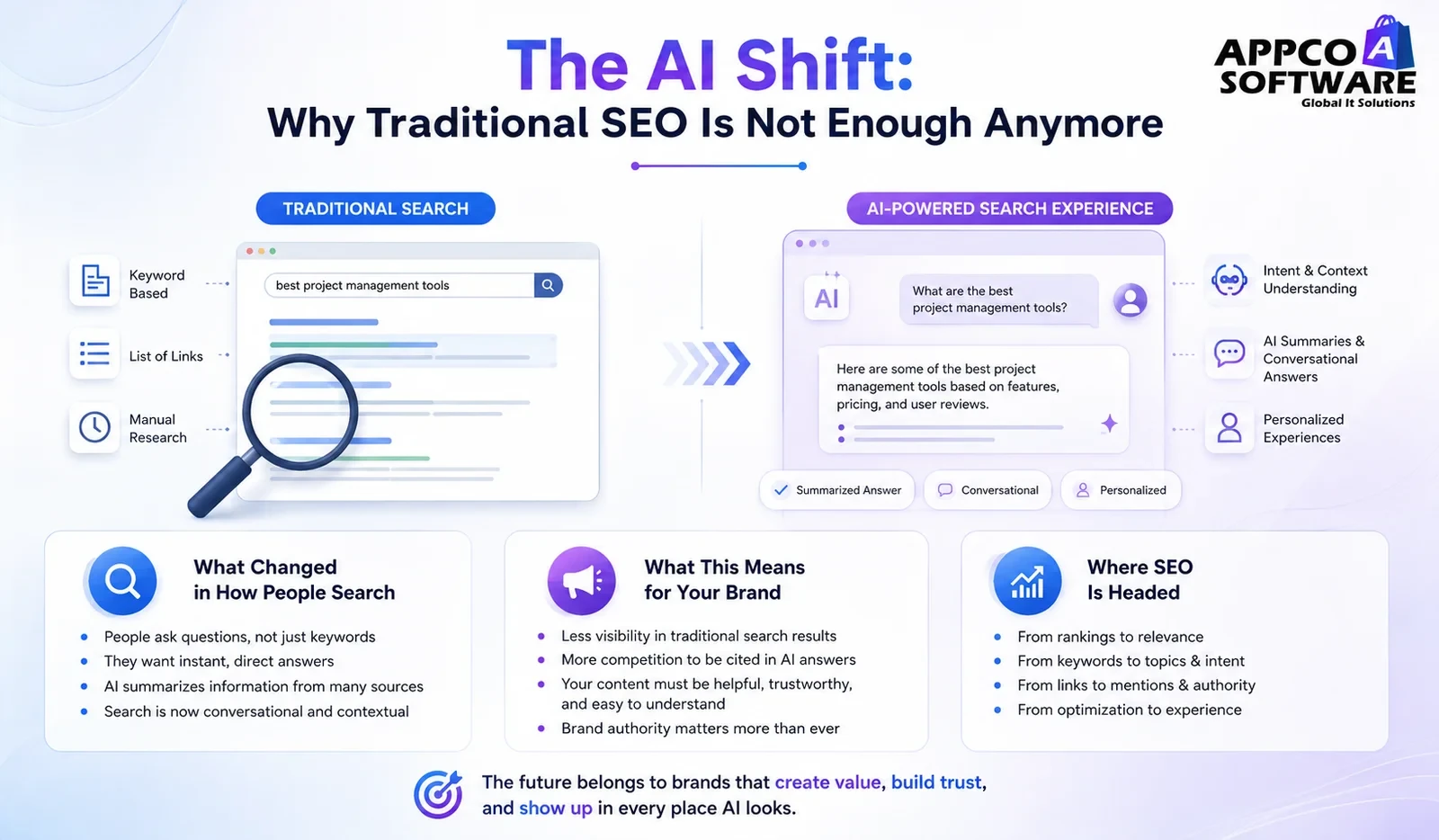
Something important has changed in the last two years, and many businesses have missed it completely.
People now open ChatGPT or Perplexity and just ask. And they get direct answers from the AI tool itself. No need to open different tabs and compare things around.
Because that answer came from somewhere. Some brand, some article, some website, the AI decided was worth citing. If your brand is not in that answer, the customer never finds you. This is what AI search optimization is about in 2026.
When someone asks ChatGPT which Shopify agency in India to hire, it picks a source. Getting your brand into that answer is what a real AI SEO strategy looks like right now.
For ecommerce stores, page speed is part of this too. How fast and cleanly a store loads affects how well AI crawlers process its content. Our Shopify speed optimization services are built around exactly this.
The future of SEO in the AI era is not smaller. It is bigger. More channels, more signals, more ways to get found. Brands that build for this now will be genuinely hard to catch later.
As a leading digital marketing agency in Jaipur, we work with ecommerce brands, D2C businesses, and service companies across India and in international markets.
For Shopify stores, we handle full SEO setup, Core Web Vitals work, content strategy, and GEO preparation. So the store shows up on Google and in AI-generated answers both.
For businesses that need leads now and want organic traffic building at the same time, we run both as one combined strategy rather than treating them as separate projects.
Nobody can answer SEO vs performance marketing without knowing your situation first. So here is how to think about it.
Option 1: Go with SEO if you want traffic that keeps coming without a monthly budget, keeping it alive. Cost per lead drops over time. The content you build today is still working two years from now.
Option 2: Go with performance marketing if you need customers this month. New launch, festival campaign, testing an offer before going all in. Ads are built for speed, and that is a real advantage when timing matters.
Option 3: Go with both if you want the best returns over 12 months. Ads bring leads while SEO builds. Organic visitors get retargeted through paid. As rankings grow, ad dependency drops. Every business we have seen run this combined SEO and performance marketing approach has come out ahead of either strategy alone.
The question was never really which one. It was always which one came first. Having said that, if you are not sure which one your business needs right now, get in touch, and we will tell you after looking at where you stand.
SEO builds organic traffic over time. Performance marketing buys traffic immediately through ads. One builds an asset. The other stops the moment the budget stops.
It totally depends on your timeline. SEO costs less per lead over time. Paid ads give faster returns upfront. Most businesses do better running both together than picking one.
Meaningful traffic normally starts around 4 to 6 months. Consistent leads with strong rankings take 8 to 12 months.
Yes, especially for getting leads fast or testing a new offer. But because costs keep rising, small businesses should build SEO alongside it so they are not fully dependent on ad spend forever.
GEO is generative engine optimization. It means showing up in AI answers from ChatGPT, Gemini, and Perplexity. A lot of searches happen there now, and most brands are completely invisible in those results.
Yes, and they work better together than separately. Ads bring leads while SEO builds. Organic traffic reduces ad dependency over time. Retargeting organic visitors through paid ads also improves conversion rates noticeably.
Error: Contact form not found.
Appco Software has been around for a very long time, helping startups and established brands build iconic websites and apps. For your unique idea to be presented in a beautiful way, contact us now!