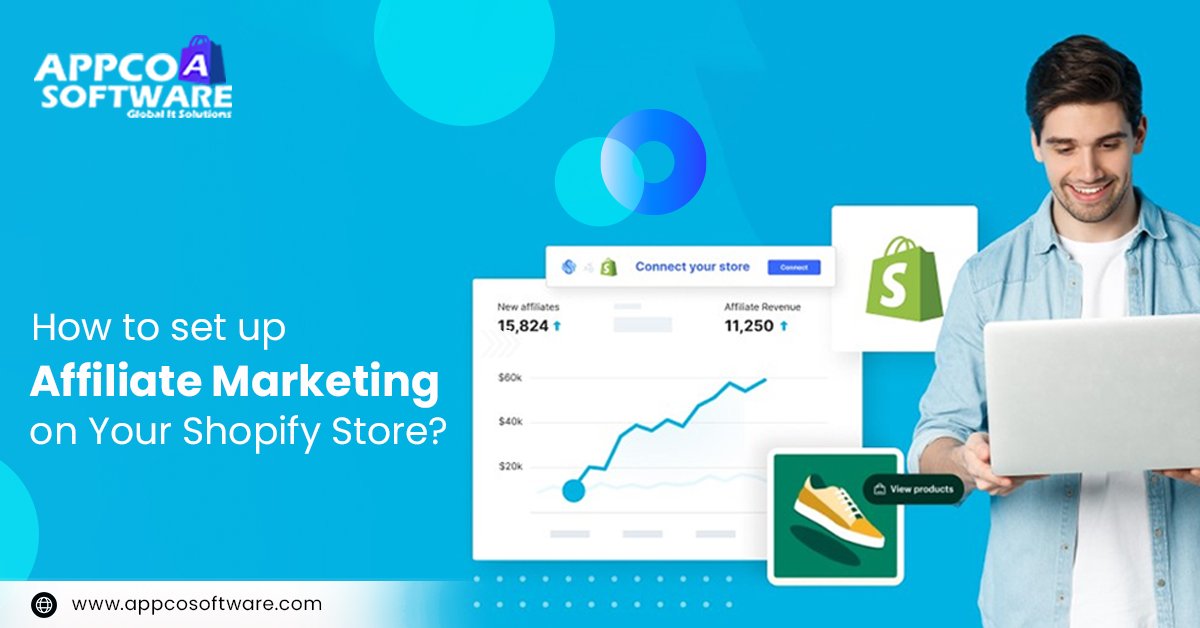
Affiliate marketing is one of the most popular and well-known ways to make money online. In case you are hearing this term for the very first time, affiliate marketing is like letting other people promote your products and bring you a sale. It’s low risk, low cost, and high potential. If you’ve already managed to set up a Shopify store or if you’re in the middle of deciding how to create an e-commerce website, affiliate marketing is the thing you should focus on.
In this guide, for example, we’re going to walk through how to set up affiliate marketing on your Shopify store, step by step. We’ll keep it simple, and we’ll also show you how it works with the Shopify ecosystem.
When it comes to affiliate marketing, it is a sales model where you pay a commission to affiliates and they refer paying customers to your website. Those affiliates can be online content creators, influencers, bloggers, or even other store owners. They share your product link, and when someone clicks on it, and buys that product, they get a commission.
Here’s why Shopify stores love it:
According to a recent study, the affiliate marketing industry is expected to jump by over $13 billion between 2024 and 2031. That’s going from around $18.5 billion to close to $32 billion. If those projections hold up, we’re looking at a steady 8% growth rate every year. So, if you see it carefully, it’s a 70% plus increase in the last 7 years. The growth is real, and it’s not slowing down anytime soon.
Amazon Associates is still running the game, with close to 95,000 companies using it in 2025. That’s almost half the entire affiliate industry, 46.27% to be exact.
The global affiliate marketing space was already worth $18.5 billion in 2024, and it’s only going up from here.
North America leads the way, holding around 40% of the total market share globally.
U.S. affiliate marketing spend alone is expected to hit nearly $12 billion in 2025, up almost 12% from last year.
Over 81% of affiliate campaigns focus on B2C products or services. So, if you’re selling direct-to-consumer, this is your space.
58% of brands say affiliate marketing helped them boost brand awareness. Not just sales, but actual long-term brand visibility.
Almost one-third (32%) of affiliate marketers are between 35 and 44 years old.
Veterans in the industry, those with over 10 years of experience, make some good money. On average, they’re pulling in $44K+ per month.
SEO is the top traffic strategy, with 69% of affiliate marketers using it to bring in organic traffic.
AI is everywhere, with more than half of all digital marketing strategies expected to be influenced by AI tools this year.
Yes, you totally can. Shopify doesn’t come with built-in affiliate features by default, but adding them is pretty simple. You just need the right app. There are a bunch of solid third-party apps made specifically for this—tools like Refersion, UpPromote, and GoAffPro. Most of them can be used directly, and that is a good thing.
Once the app and everything else are set up, you can create custom referral links, track who is bringing in sales. You can also set commission percentages and even manage payouts. All of this runs in the background. And you are supposed to focus on other things, such as orders, products, or customer service.
The best part is that you only pay when someone brings in actual results. It’s not like running ads where you’re spending money upfront and hoping people convert. With affiliate marketing, someone promotes your product, drives a sale, and then gets a cut. It’s that simple!

Let’s break down the process so you know exactly what to do.
Before you work on affiliate marketing, your store needs to be fully functional. That means:
If you’re still working on that, it’s a good time to hire Shopify developers or get help from a trusted ecommerce website company that offers Shopify store setup services. Remember that affiliates won’t promote a half-finished store.
Shopify is a good platform that works well with several third-party affiliate tools. Most of the below-mentioned apps offer free trials or low-cost starter plans. But, according to your business requirements, you need to choose a perfect one. And most importantly, choose an app that is easy to use, has solid reporting, and integrates cleanly with Shopify.
Some of the most popular options include:
Look for features like:
Now, at this stage, you need to think about how much you can afford to pay per sale. In the market, for example, most Shopify affiliate programs offer between 5% to 20% depending on the product margins.
For example:
You need a place where potential affiliates can sign up. You can use your affiliate marketing app’s built-in tools to generate a signup form. Add this page to your main navigation or footer, so it’s easy to find.
This page should explain:
Now, after setting everything up, you will have to promote your affiliate program. You can start by inviting people. Here’s where to begin:
And if you’re working with an ecommerce website company, they might already have networks to tap into. The more personal your outreach, the better the results. To grow in the affiliate marketing business, don’t just rely on random signups.
Once affiliates start sharing links, track everything. Your app should show:
From here, you can start testing:

Setting up affiliate marketing is one thing—actually making it work is something else. Many people create a basic setup and call it done, then wonder why no one is promoting their products. If you want this to work for real, you’ve got to treat your affiliate program like an actual part of your business, not just an afterthought.
This should go without saying, but you’d be surprised how many brands mess this up. If someone’s putting in work and sending you paying customers, pay them fast. Whether it’s PayPal, Stripe, or straight to their bank—just keep it smooth.
You can’t just hand someone a generic link and expect magic. Give them things they can actually use like product photos, promo banners, basic copy, or even discount codes they can offer to their audience.
Got a new product dropping? A flash sale? Seasonal offer? Tell your affiliates first. A quick email with a few bullet points and a link goes a long way. Most of them are busy and juggling 10 other offers, so help them help you.
Just because you’re getting clicks doesn’t mean they’re real ones. Keep an eye on traffic sources. If something does not go right, like a weird bounce from a coupon site that doesn’t match your buyer profile, shut it down quickly.
Find out who’s actually driving sales and hook them up with better perks. Higher commissions, early access, even free products. Treat your best affiliates like business partners, not just names on a list.
Don’t put your affiliate sign-up link five pages down somewhere in the content. Add it to your footer, link it in your menu, and mention it in emails. If people don’t know you have a program, they’re not going to join it.
The reason affiliate marketing is a great thing for Shopify owners is that it grows without eating up your time. Once you set up everything, and if it starts running well, you’ve got a team of different content creators who are promoting your store.
And because Shopify makes it easy to connect tools, everything runs smoothly in the background. There is no need to work on some custom coding. If you’re not sure how to start and where to go, you are not alone. If this is the case, you can always hire Shopify developers or ask for a custom setup through a Shopify store setup service. And those guys will help you integrate everything in the right way.
If you’ve already taken the time to build a Shopify store or are planning to build an ecommerce website, it makes sense to incorporate affiliate marketing. It’s an easy way to get more sales without spending your ad budget. Plus, once you get going, it’s very easy to keep going with very little effort.
Just be smart about how you set it up, use the right tools, and give your affiliates everything they need to sell your product. And if you want a setup that works from the start? Talk to someone who does this every day—whether it’s your development team or an entire Shopify specialist agency. You don’t have to figure it out alone. Contact us now.
Nope. Most affiliate apps are plug-and-play. If you can install a Shopify app, you can set up affiliate marketing.
There’s no single best option, but Refersion, UpPromote, and GoAffPro are solid picks. Try one, see what fits your workflow.
Yes. Many Shopify stores run both. Just keep them separate. Affiliates are usually influencers or marketers; referrals are regular customers.
Use tracking tools that show traffic quality. Ban shady domains, block coupon sites if needed, and only pay on verified sales.
Yes. Most affiliate tools let you assign unique coupon codes that still track back to each affiliate.
You can hire someone to run it for you. Either in-house or through a Shopify expert agency that handles affiliate setup and growth.
No, as long as they’re tagged properly (usually with nofollow). It’s a common setup and won’t harm your search rankings.
They’re different. Paid ads give instant results but cost money upfront. Affiliate marketing takes longer to build but is more sustainable in the long term.
Appco Software has been around for a very long time, helping startups and established brands build iconic websites and apps. For your unique idea to be presented in a beautiful way, contact us now!